top of page
LA CONNER, WASHINGTON
Open Thursday – Sunday · 11 AM – 4 PM

The Home Front
How Skagit County did its part in World War II, told through local newspaper ads, national posters and the ration books families guarded like money.

01
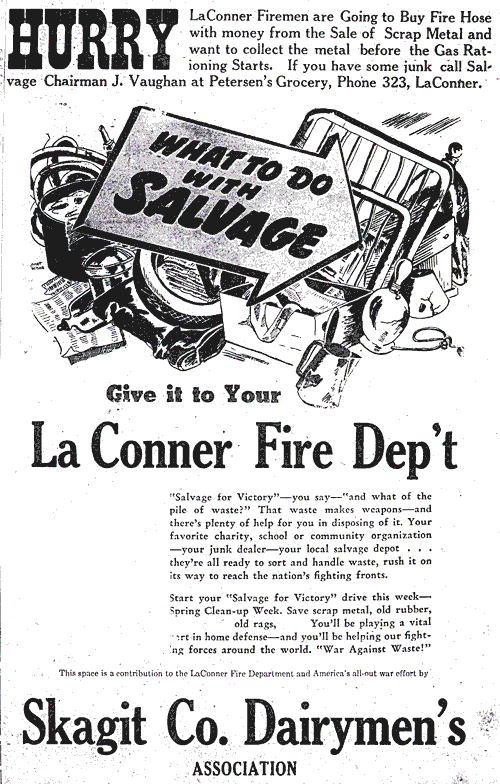
La Conner Fire Dept. salvage drive
The scrap drive was an important part of the war effort at home. Scrap drives were organized on the local level. This ad shows how one community promoted their drive.

02
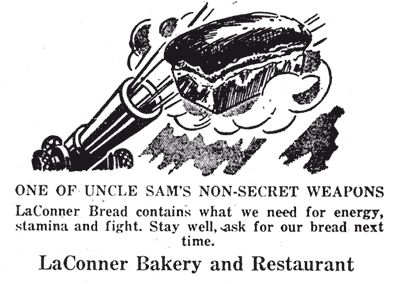
La Conner Bakery: “One of Uncle Sam’s non-secret weapons”
This ad says it all.

03
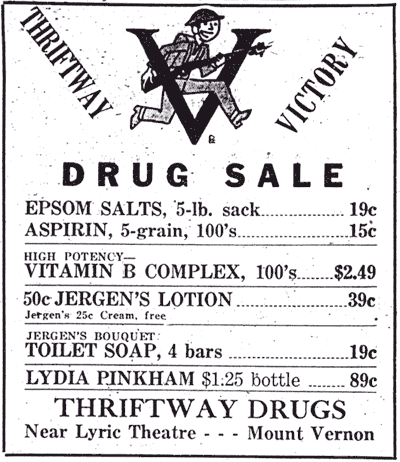
Thriftway Drugs “V for Victory” sale
Another grocery ad with "V for Victory" theme.

04
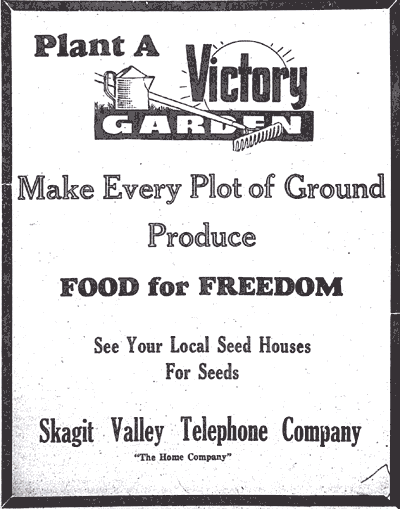
Plant a Victory Garden
An ad encouraging Victory Gardens as a patriotic act.

05
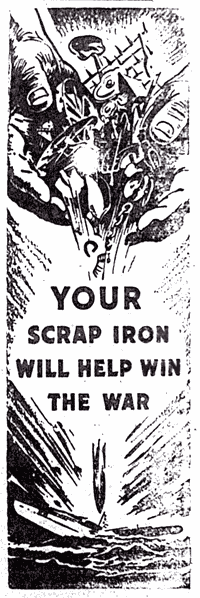
Your scrap iron will help win the war
An ad for scrap metal from Burlington Journal.

06
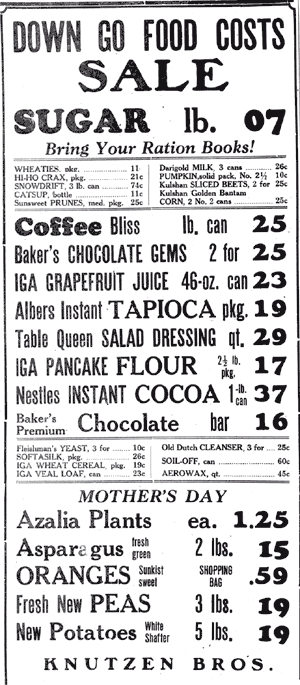
Knutzen Bros. grocery sale
Sugar is prominently displayed in this grocery ad. It continued to be a scarce item throughout the war due to lack of manpower to harvest sugar beets in the country and the scarcity of ships transporting sugar cane from Hawaii.
“I can remember when a store received a shipment of scarce items, such as nylons or chocolate candy bars, word spread like wildfire and lines formed immediately at the store.” — D. T., Anacortes
“I can remember when a store received a shipment of scarce items, such as nylons or chocolate candy bars, word spread like wildfire and lines formed immediately at the store.” — D. T., Anacortes

07
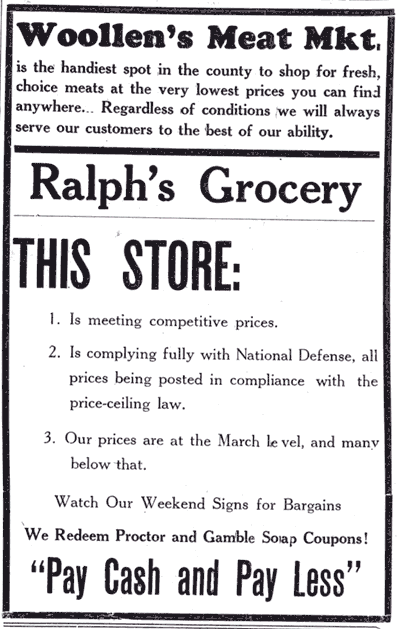
Ralph’s Grocery price pledge
This store states its compliance with prices for meat despite the hard times.

08
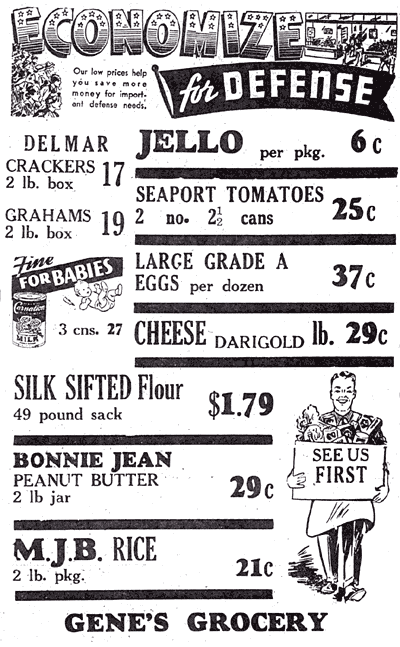
Gene’s Grocery: “Economize for defense”
Thriftiness and patriotism are touted in this ad.

09
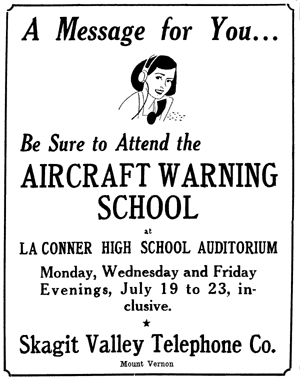
Aircraft Warning School, La Conner
Within hours after the bombing of Pearl Harbor, people were deployed to various places around Skagit County to watch for the arrival of enemy aircraft. So great was the fear of bombing that by the end of the second week formal 24 hour observation services were set up along the bays and on rooftops in the towns throughout the county. Once the Washington State and National Defense Councils were organized, training was available in the form of Aircraft Warning Schools. After they graduated, participants volunteered in the Aircraft Warning Service. This is an ad for such a school in La Conner.

10
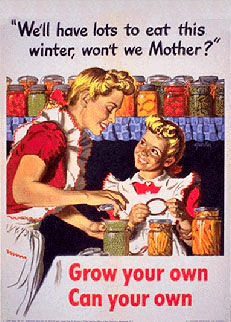
“Grow your own, can your own”
National poster encouraging canning produce from the garden.

11
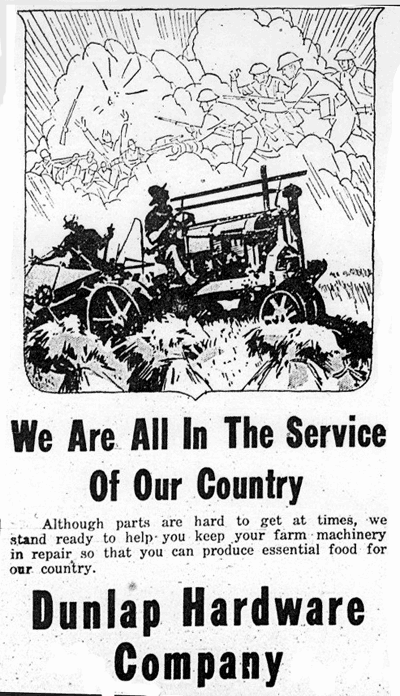
Dunlap Hardware: “We are all in the service”
By the spring of 1942, patriotic ads such as this one were common in the local newspapers. Everyone was doing their part.

12
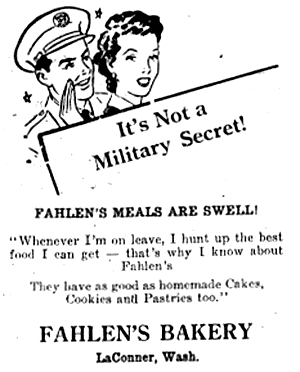
Fahlen’s Bakery: “It’s not a military secret!”
An ad for a bakery. Military images were encouraged in advertisements, but this ad also shows how the war influenced business owners.

13
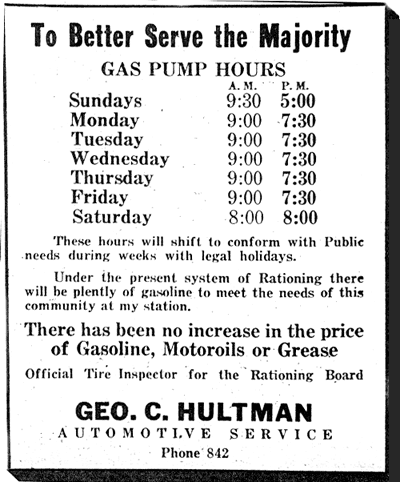
Geo. C. Hultman gas pump hours
Gas rationing began in November 1942. Stamp booklets were issued. People employed in war-related jobs and the post office received more rations.

14
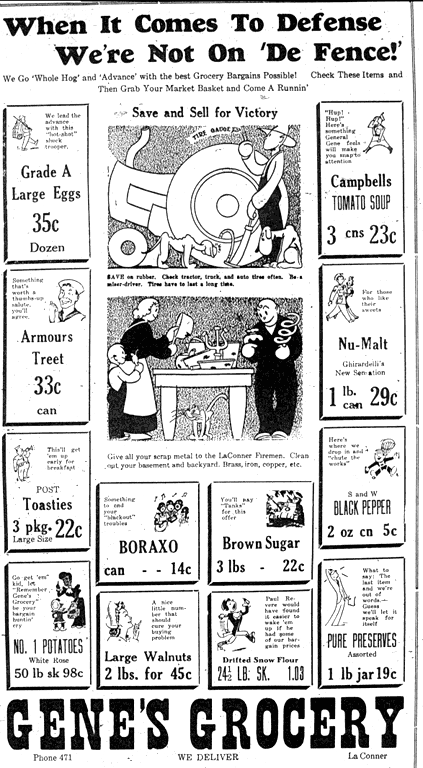
Gene’s Grocery: “We’re not on the fence”
These are fighting words to get the shopper in. Average wage in 1940s was about 60-78 cents an hour.

15
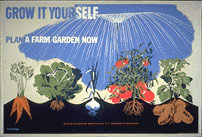
“Grow it yourself”
This is a poster from the national campaign promoting growing a Victory Garden at home.
“We had extra large gardens, as my mom would can everything she could.” — L. H., Concrete
“We had extra large gardens, as my mom would can everything she could.” — L. H., Concrete

16
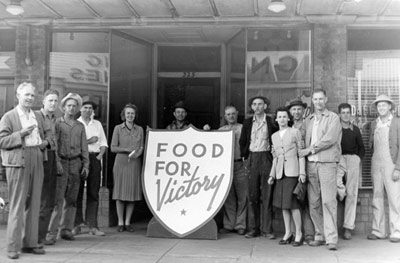
Victory Garden kick-off, Mount Vernon
Picture taken in Mount Vernon, WA for kick-off for the Skagit County Victory Garden campaign.

17
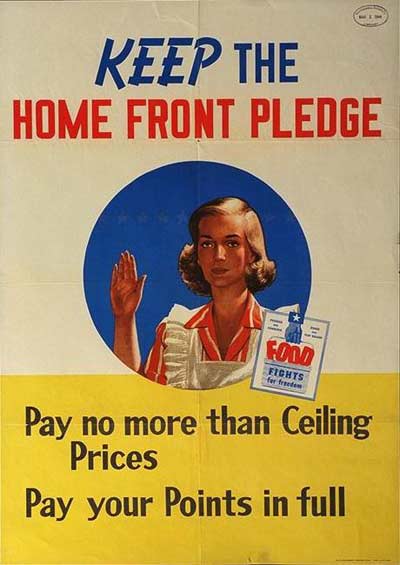
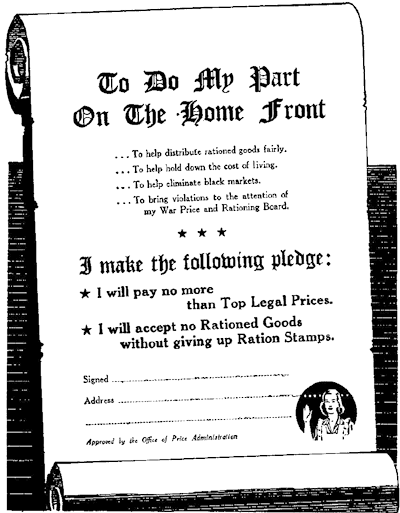
Keep the Home Front Pledge
Poster promoting the proper use of rationed goods.
“Ration coupons were guarded like money. I remember people trading stamps and talking about where they could buy items on the 'black market' with higher prices and no stamps required. We had trouble buying coffee and sugar. Sugar was in high demand because everyone canned fruit and garden produce.” — J.R., Mount Vernon, WA
“Ration coupons were guarded like money. I remember people trading stamps and talking about where they could buy items on the 'black market' with higher prices and no stamps required. We had trouble buying coffee and sugar. Sugar was in high demand because everyone canned fruit and garden produce.” — J.R., Mount Vernon, WA

18
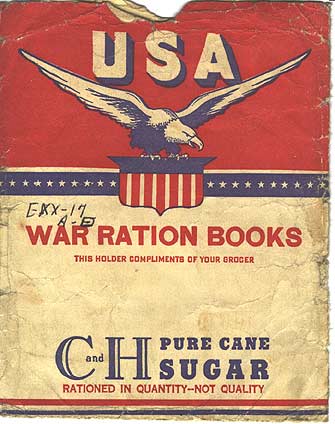
War Ration Book cover
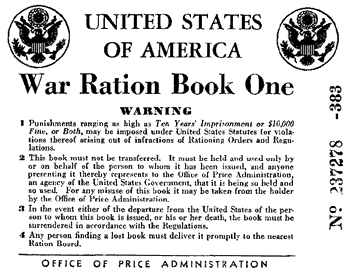
This is commercial book cover for War Ration Book One. The stamps were issued by the U. S. Office of Price Administration. Only a few months after going to war, a national system of wartime rationing and price control regulations was implemented. It was designed to keep goods available and consumer prices at reasonable levels. Sugar became the first item rationed. Introduced in May of 1942, Book One contained 28 stamps. Each stamp permitted the holder to purchase a fixed amount of sugar in a set period of time. There were a total of 4 books issued by the time the war ended.

19
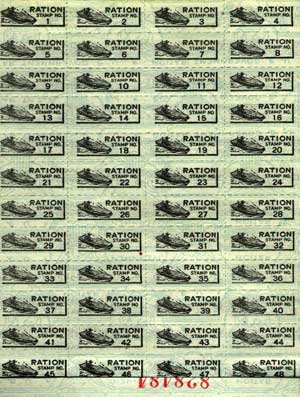
Ration stamps, Book No. 3
A sheet of ration stamps from War Ration Book No. 3.

20
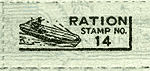
A single ration stamp
A close-up of a stamp from War Ration Book No. 3. There were a total of 48 ½" x 1" stamps on each page.

21
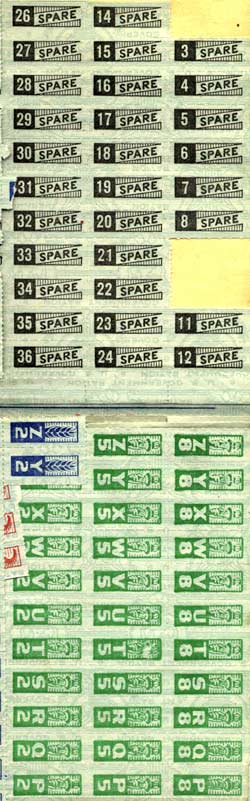
Stamps from War Ration Book Four
Stamps from War Ration Book Four. Spare stamps could be used for extras such as sugar or coffee. A cup of sugar was allowed each week and a cup of coffee per day. Farmers received spare stamps if they were actively farming.

22
“To do my part on the Home Front”
A Home Front campaign encouraging people to follow the rules of rationing.

23
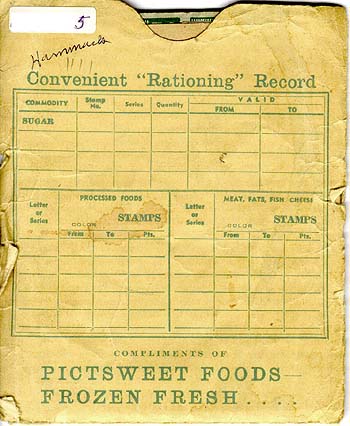
Pictsweet Foods ration book holder
Ration book holders were issued free to shoppers at grocery stores as an advertising gimmick. This one is from 1943. Nothing's changed!

24
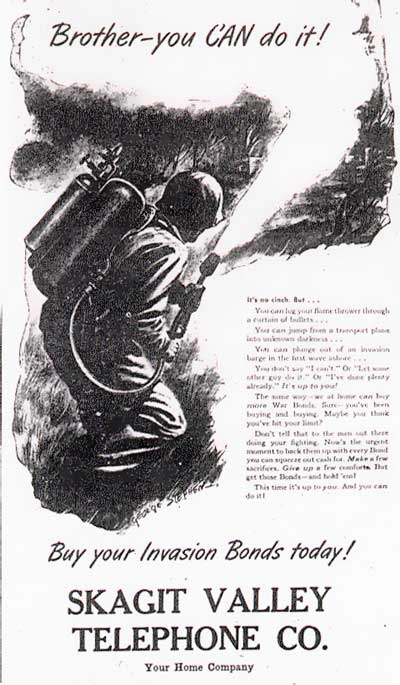
Skagit Valley Telephone Co.: buy invasion bonds
Ad supporting the sale of war bonds.

25
War Ration Book One
Cover to the first War Ration Book issued by the U. S. Office of Price Administration. Its owner had to sign on the cover and fill in information on their physical description. No one else could use it.

26
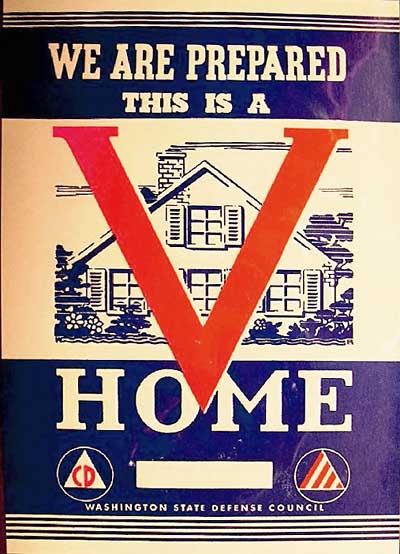
V-Home: “We are prepared”

27
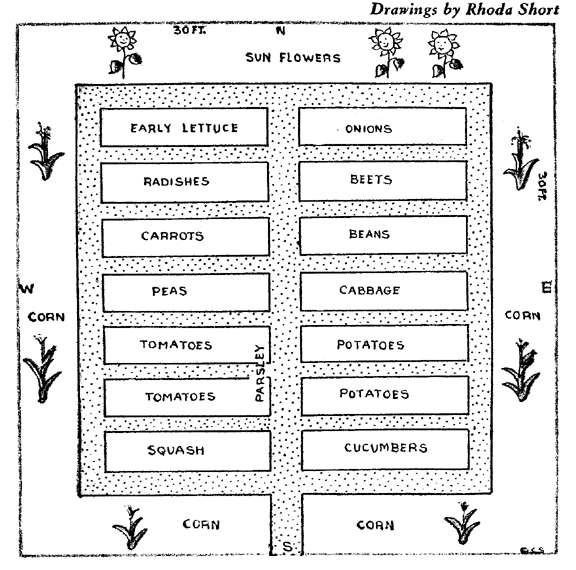
A Victory Garden plan for kids
A plan for a garden from Child Life, a popular children's magazine in the 1940s. Articles on gardening, composting and having fun with gardens were published regularly. Children could be part of their Good Citizen's League.

28
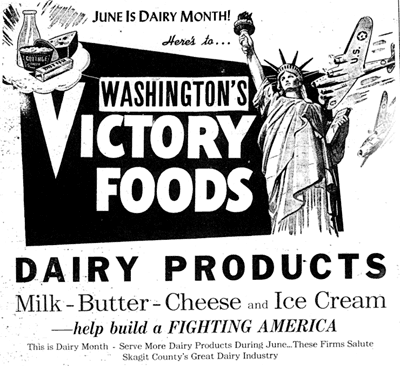
Washington’s Victory Foods
Dairy ad promoting war effort. Many Skagit farmers were exempt from the draft because it was considered important to be providing food for the war effort and the nation.
bottom of page